

Comprehension, Memory and Recall Skills in Children
¡Proveemos terapia del habla y del lenguaje bilingüe!
We provide bilingual speech and language therapy!
How Comprehension, Memory and Recall Work Together
Comprehension, memory, and recall skills each play a part in how your child learns:
Comprehension is understanding words, questions, and other information.
Memory is keeping information in mind briefly or storing it for later.
Recall is bringing back something already learned or experienced.
Understanding language is also called receptive language. Working memory means holding information in mind while using it, such as keeping track of the steps in an activity.
What You May Notice in Everyday Life
You may notice that your child:
Needs familiar questions or directions repeated.
Starts a task but loses track of what comes next.
Has trouble recalling story details or describing something that happened.
Struggles to find a word they know.
These observations don’t establish a memory disorder or mean your child isn’t trying. Attention, understanding the message, and finding words to respond can all affect what you see. When difficulties regularly interfere with play, learning, or daily routines, an evaluation can help clarify where support is needed.
How Therapy Can Support Everyday Learning
Understanding and Using Information
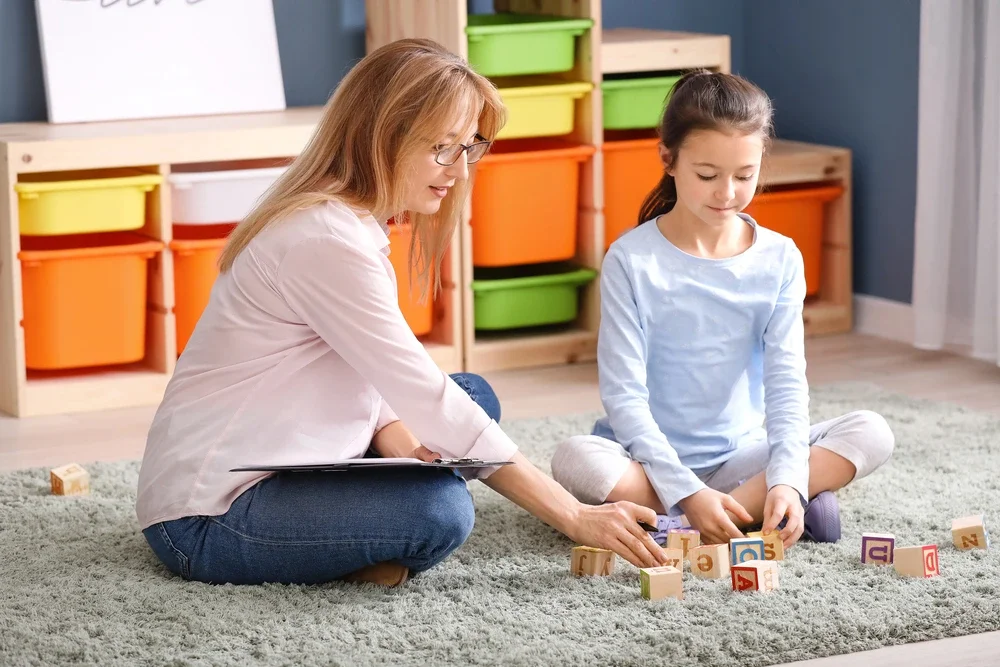
Pediatric therapy can help children practice understanding and using information during communication, play, and everyday activities. Depending on your child’s needs, therapy may focus on skills such as understanding vocabulary, answering questions, following directions, or applying what they have learned during familiar activities.
Remembering Steps and Sharing Experiences
Therapy may include putting events in order, recalling meaningful details, or learning a familiar routine. For example, a child might use pictures to retell a short story or practice the sequence of washing their hands.
Progress is measured against specific goals. Therapists can adjust the level of support and look at how your child uses a skill with different people, activities, or routines.
Ways to Make Information Easier to Follow at Home
Try making spoken information easier to follow before asking your child to remember more:
Give one direction at a time instead of several together.
Pause after speaking so your child has time to respond.
Pair your words with a picture, gesture, or object.
During cleanup, you might say, “Put the blocks in the bin,” while pointing to it. Wait before giving the next direction. Aim for a shared activity rather than repeated questions that test what your child remembers.
Frequently Asked Questions About Comprehension, Memory and Recall Skills
-
Yes. Producing clear speech sounds and understanding language are different skills. A child may pronounce words clearly but still struggle to make sense of a question or sentence.
-
Remembering information can be harder when directions include several steps, use unfamiliar language, or require your child to hold information in mind while completing a task. A therapist can help identify which part makes the activity more difficult.
-
No. Using more than one language does not cause speech or language delays. Keep communicating in the languages your family uses comfortably, and tell the therapist which languages your child hears and speaks.
GET STARTED
Ready to Talk With a Pediatric Therapist?
If you have questions about your child’s comprehension, memory, recall, or ability to use information during everyday activities, contact Children’s Therapy Services of Colorado.
Our team can learn more about what you’re noticing and help you understand what type of evaluation or support may be helpful.