

Articulation Disorders in Children
¡Proveemos terapia del habla y del lenguaje bilingüe!
We provide bilingual speech and language therapy!
When Your Child Has Trouble Saying Certain Sounds
If your child has trouble saying certain sounds clearly, you may wonder whether it is part of typical speech development or whether extra support could help. Articulation refers to how a child produces individual
speech sounds.
An articulation disorder involves ongoing difficulty producing certain sounds clearly, which may make it harder for other people to understand your child. A speech evaluation can help you understand what your child is experiencing and whether speech therapy may be appropriate.
What Can Articulation Difficulties Sound Like?
Parents often notice speech sound difficulties during everyday conversations before they know what to call them. You may notice that your child:
Leaves a sound out of a word
Uses one sound in place of another
Has trouble producing the same sound across different words
Is easier for close family members to understand than people who know them less well
Children learn speech sounds over time, so these patterns do not automatically mean your child has an articulation disorder. If you are concerned about how clearly your child speaks, a speech-language pathologist can help you understand what you are hearing.
How Can Speech Therapy Help With Articulation?
Speech therapy starts with understanding how your child currently produces speech sounds. During an evaluation, a speech-language pathologist listens to your child’s speech, identifies sounds or patterns that may be difficult, and talks with you about what you have noticed at home or in other settings.
If therapy is recommended, sessions may use play-based activities to practice difficult sounds and gradually use those sounds in words, phrases, and everyday communication. Your therapist may also suggest simple ways to support practice at home based on your child’s individual goals.
Explore our pediatric speech therapy services to learn more about how our team supports children with speech and communication needs.
Frequently Asked Questions About Articulation Disorders
-
A speech delay is a broader term used when speech skills are developing later than expected. An articulation disorder refers more specifically to difficulty producing particular speech sounds.
-
Consider reaching out if you are consistently concerned about how clearly your child speaks or if other people frequently have trouble understanding them. You can also seek guidance if a pediatrician, teacher, or caregiver has raised a concern.
-
Some speech sound differences change naturally as children develop, while others may continue and benefit from support. A speech-language pathologist can evaluate your child’s speech and help you understand whether additional support may be appropriate.
-
You do not need to correct every word your child says. A speech-language pathologist can recommend simple ways to model and practice sounds during everyday routines based on your child’s needs.
Our Process
step 01
Phone Consult
During an initial phone consultation, we'll ask what you are noticing during everyday routines. This may include how your child communicates, understands language, produces speech sounds, interacts with others, or manages feeding. The conversation helps the team determine whether a speech-language evaluation may be an appropriate next step.

step 02
Evaluation
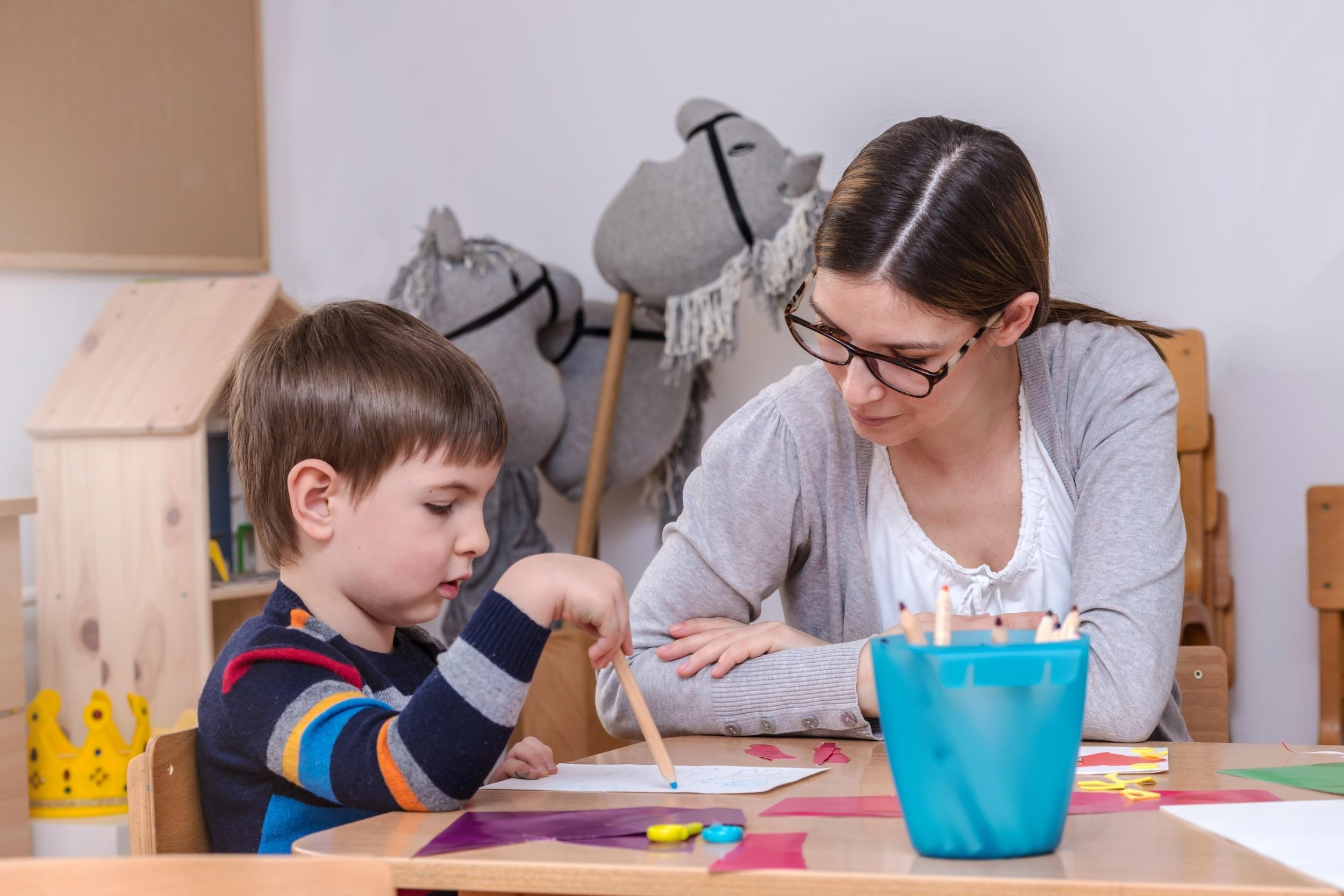
A speech-language pathologist reviews your child's case history, parent questionnaire, and current concerns. The evaluation may include standardized measures and play-based or conversational observation.
Depending on the reason for the evaluation, the therapist may look at speech sound production, expressive and receptive language, social communication, fluency, oral motor or feeding skills, literacy, or augmentative and alternative communication needs. Parents and caregivers also share what communication looks like at home, at school, and during daily routines.
step 03
Recommendations
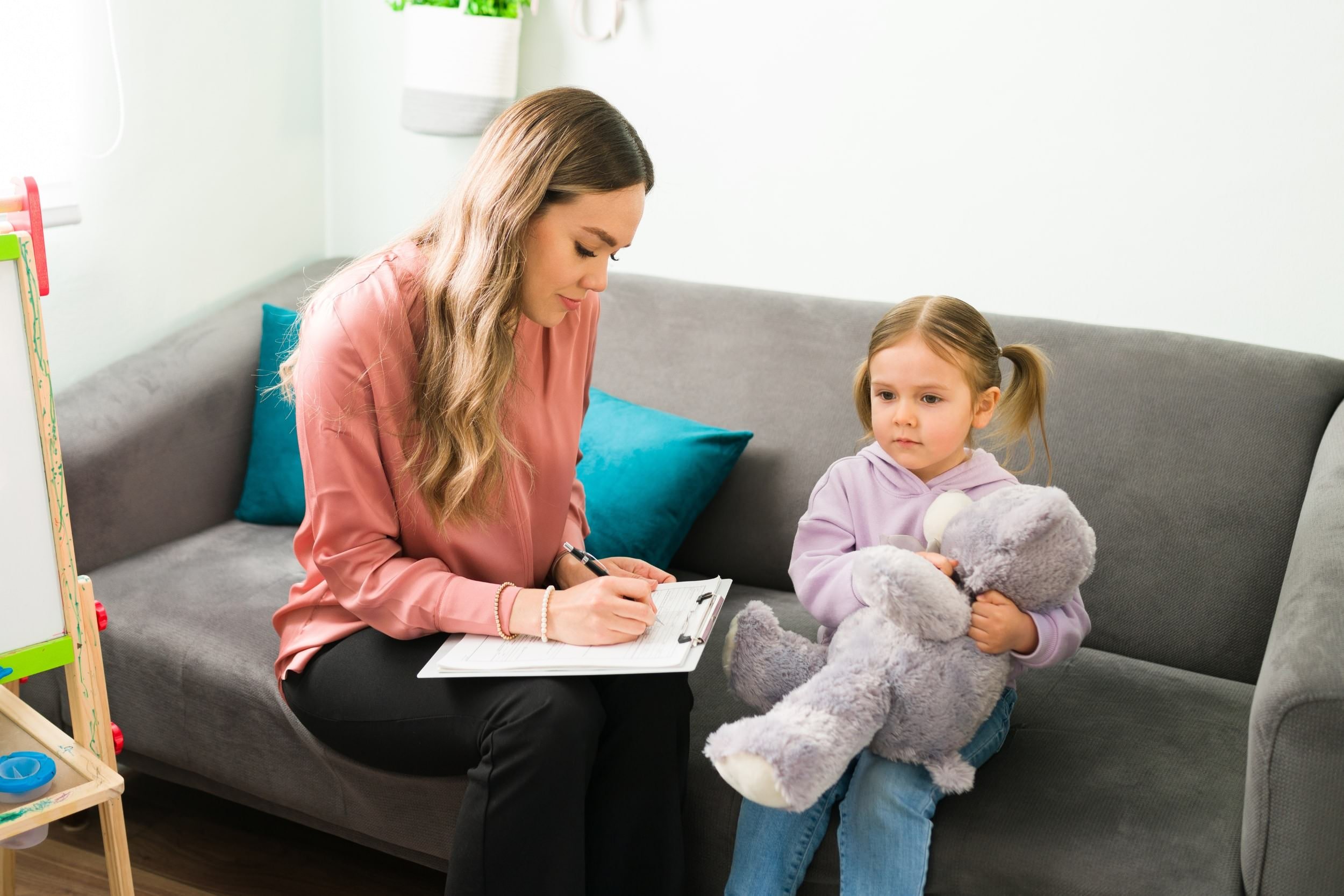
After the evaluation, the therapist explains the findings in plain language. You'll discuss your child's strengths, areas where support may help, and any questions you have about the results. If pediatric speech therapy is recommended, the therapist will outline proposed goals and next steps based on your child's needs.

step 04
Therapy
Sessions follow the goals developed from your child's evaluation and use play-based, evidence-based activities. A session may include practicing speech sounds in words and conversation, building vocabulary or sentence length, following directions, supporting social communication, using an augmentative communication system, or working on feeding skills.
The therapist adjusts activities and practice as your child develops new skills. For families coming from Denver and nearby communities, ongoing clinic sessions take place at our Northglenn office unless another currently available service option applies.

step 05
Progress Checkups
After appointments, your child's therapist provides a brief update about what was practiced and how your child responded. Families may also receive simple strategies to use during play, meals, reading, or other daily routines.
The therapist reviews goals over time and may adjust the treatment plan as your child's needs and progress change. You can also ask questions about what you are noticing outside therapy.
step 06
Graduate from Services
Speech therapy may end when your child has met the agreed-upon goals, no longer needs ongoing support, or another plan is more appropriate. Before services end, the therapist will review your child's progress with you and explain any follow-up recommendations. You can contact the team again if new communication concerns arise.


GET STARTED
Ready to Talk With a Pediatric Speech Therapist?
If you have questions about how clearly your child speaks, contact Children’s Therapy Services of Colorado.
Our team can help you talk through what you are noticing and whether a speech evaluation may be an appropriate next step.