
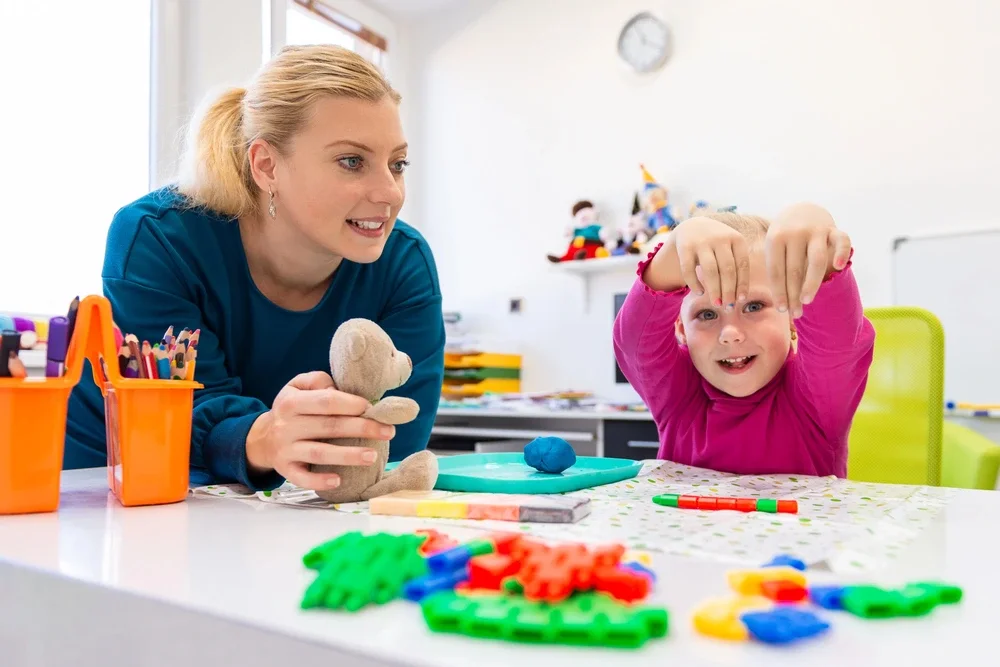
Play Skills in Children
¡Proveemos terapia del habla y del lenguaje bilingüe!
We provide bilingual speech and language therapy!
Supporting Play and Communication Skills
Play skills are the abilities children use to explore, interact, and connect with other people. They can include taking turns, sharing attention, copying actions, pretending, and communicating during play.
Play also gives children opportunities to practice speech, language, and social-emotional skills. If your child has difficulty communicating during play, sharing attention, joining activities with others, or adapting when play changes, play-based therapy may provide opportunities to practice those skills.
How Therapy Can Support Play Skills
Pediatric therapy can use play-based activities to support communication, participation, interaction, flexibility, and other developmental skills. Therapy addresses areas based on your child’s strengths, needs, goals, and how they participate in play and daily activities.
Therapy may support skills such as:
Communicating wants, needs, and ideas during play
Participating in shared activities with others
Learning and practicing new skills
Understanding and responding during activities
Adjusting when an activity or routine changes
Building social interaction and participation skills
Using skills across different activities and settings
What Happens During an Evaluation?
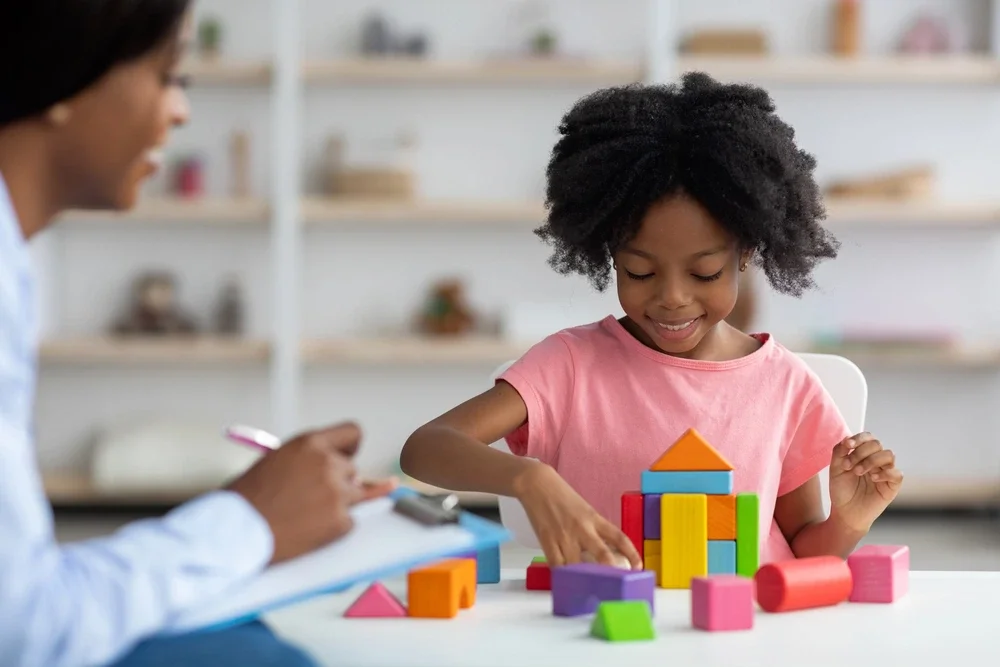
An evaluation gives the therapist a chance to learn about your concerns and observe how your child communicates, participates, and engages during age-appropriate activities. The therapist can then explain what they noticed and discuss whether additional support may be helpful.
Frequently Asked Questions About Play Skills
-
Playing alone can be a normal part of how children explore and learn. If your child consistently has difficulty communicating, sharing attention, or joining others during play, it may be helpful to discuss what you are noticing with a pediatric therapist.
-
Yes. Children may have different interests, ways of playing, communication styles, and levels of interaction with others. A therapist can look at how your child plays and participates alongside their broader developmental strengths and needs.
-
Parents can support play by joining activities their child enjoys, following their interests, and creating opportunities for communication, shared attention, and interaction. Your child’s therapist can also suggest strategies that fit the skills they are working on.
GET STARTED
Ready to Talk With a Pediatric Therapist?
If you have questions about your child’s play, communication, or social interaction, contact Children’s Therapy Services of Colorado.
Our team can learn more about what you’re noticing and help you understand what type of evaluation or support may be helpful.