
Problem-Solving and Interaction Skills
¡Proveemos terapia del habla y del lenguaje bilingüe!
We provide bilingual speech and language therapy!
What Are Problem-Solving and Interaction Skills?
Problem-solving and interaction skills help children communicate with others, participate in play and routines, and figure out what to do when something changes or does not go as expected. These skills develop over time, and some children may need additional support as they learn them.
You may notice that your child has difficulty taking turns, joining an activity, asking for help, responding to another person, or working through a change in a familiar routine. Some children may benefit from support building the communication and participation skills used in these situations.
How Therapy Can Support Problem-Solving and Interaction Skills
Pediatric therapy can support the communication, participation, and problem-solving skills children use during play, routines, and interactions with others. The areas addressed in therapy depend on your child’s strengths, needs, and goals.
Therapy may support skills such as:
Expressing needs, ideas, and questions
Understanding and responding to others
Participating in play and shared activities
Following routines and directions
Adjusting when an activity or situation changes
Trying different strategies when a problem comes up
Building communication and interaction skills
What Happens During an Evaluation?
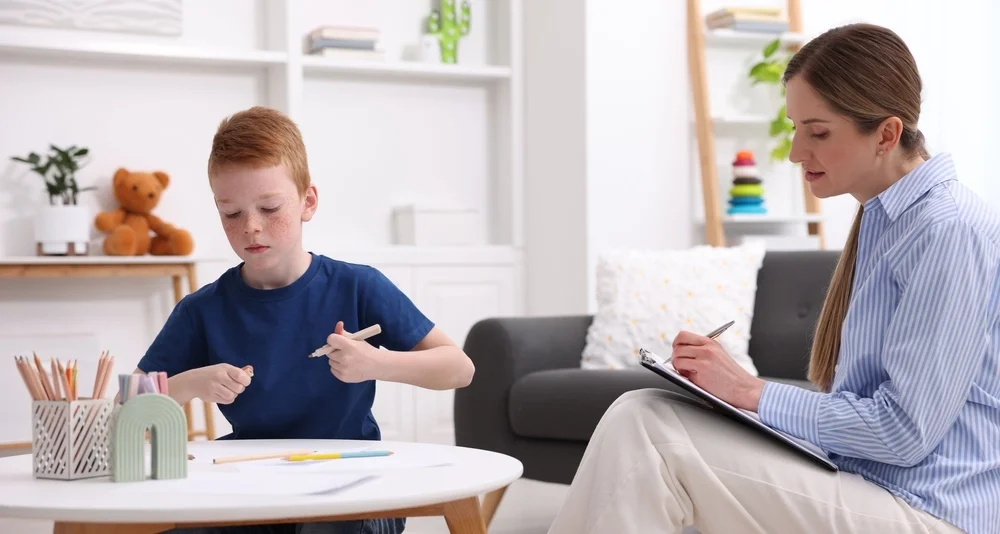
An evaluation gives the therapist a chance to learn about your concerns and observe how your child uses these skills during play, routines, or other age-appropriate activities. The therapist can then explain what they noticed and discuss what support, if any, may help.
Frequently Asked Questions About Problem-Solving and Interaction Skills
-
No. Children may need support with these skills for different reasons, and these difficulties alone do not point to one specific diagnosis. An evaluation can help identify your child’s strengths and areas where additional support may be helpful.
-
Children may still be learning to try a different approach when something doesn't go as expected. Giving a small hint, modeling another option, or allowing extra time to work through the problem can help support flexible problem-solving.
-
Yes. Children can interact through gestures, sounds, facial expressions, shared attention, and play as well as spoken language. Responding to these communication attempts and allowing time for back-and-forth interaction can help support connection with others.
-
Parents can build practice into activities their child already enjoys by creating opportunities to take turns, make choices, ask for help, and try different solutions when small problems come up. Your child’s therapist can also suggest strategies that match the skills they are working on.

GET STARTED
Ready to Talk With a Pediatric Therapist?
If you have questions about your child’s problem-solving, communication, or interaction skills, contact Children’s Therapy Services of Colorado.
Our team can learn more about what you’re noticing and help you understand what type of evaluation or support may be helpful.